Agate Stone Slabs
Few natural materials combine geological history and visual artistry as convincingly as agate. When cut and assembled into decorative panels, agate stone slabs reveal intricate mineral banding, crystalline pockets, and translucent layers that interact beautifully with light. Because every formation is different, these slabs introduce individuality to architectural spaces in a way that manufactured materials rarely achieve.
Interior designers, architects, and hospitality projects increasingly specify agate surfaces for statement installations such as illuminated wall panels, bar fronts, and custom furniture. This guide explains what agate is, how slabs are produced, the most common types available in the market, and how to select the right slab for a specific interior application.
What Is Agate Stone?
Agate is a form of chalcedony, a microcrystalline variety of quartz that forms inside volcanic rock cavities. Over thousands of years, silica-rich fluids deposit layers of minerals within these cavities. As the minerals crystallize, they create the distinctive banding patterns that make agate immediately recognizable.
Natural Structure and Color Variations
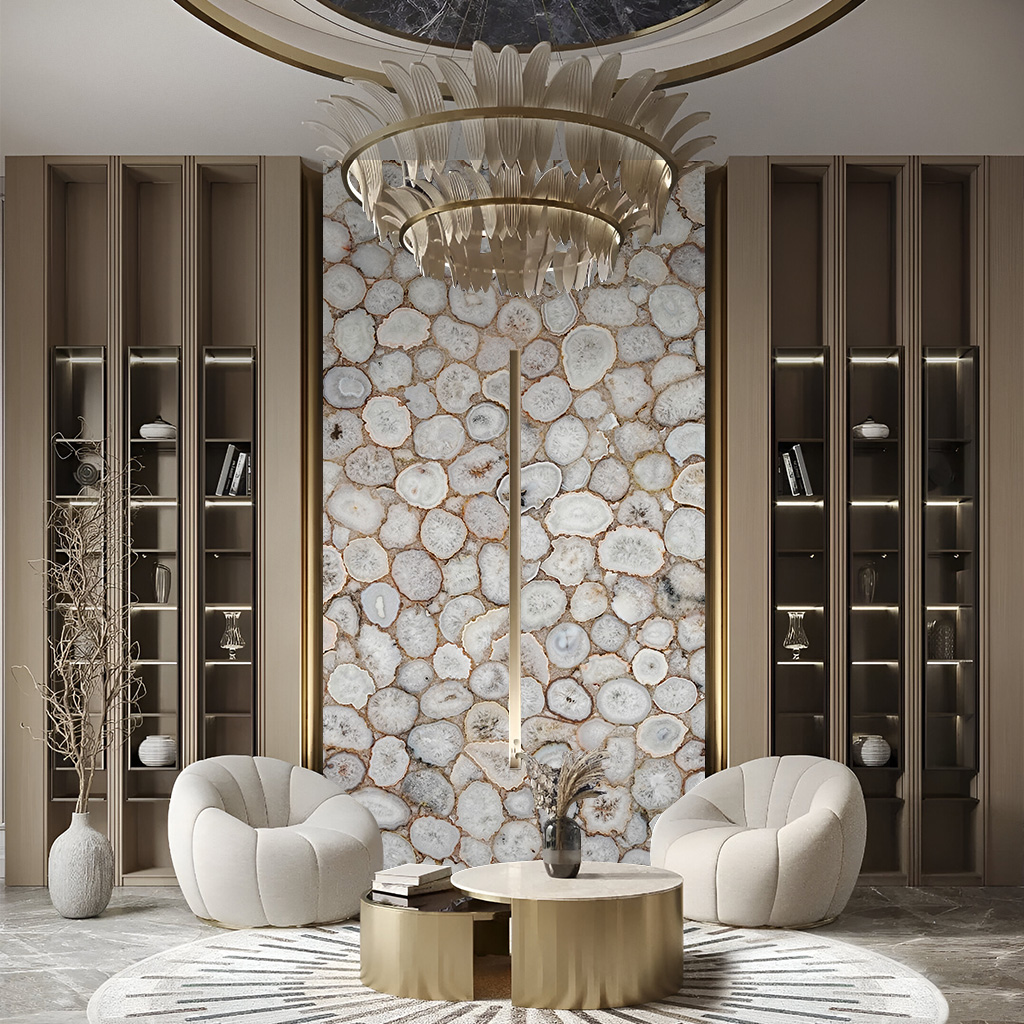
The color palette of agate ranges from soft greys and whites to vivid blues, greens, and amber tones. These colors occur naturally through trace minerals present during formation. In slab form, the patterns often resemble flowing landscapes or abstract geological artwork.
Why Agate Is Used in Architectural Design
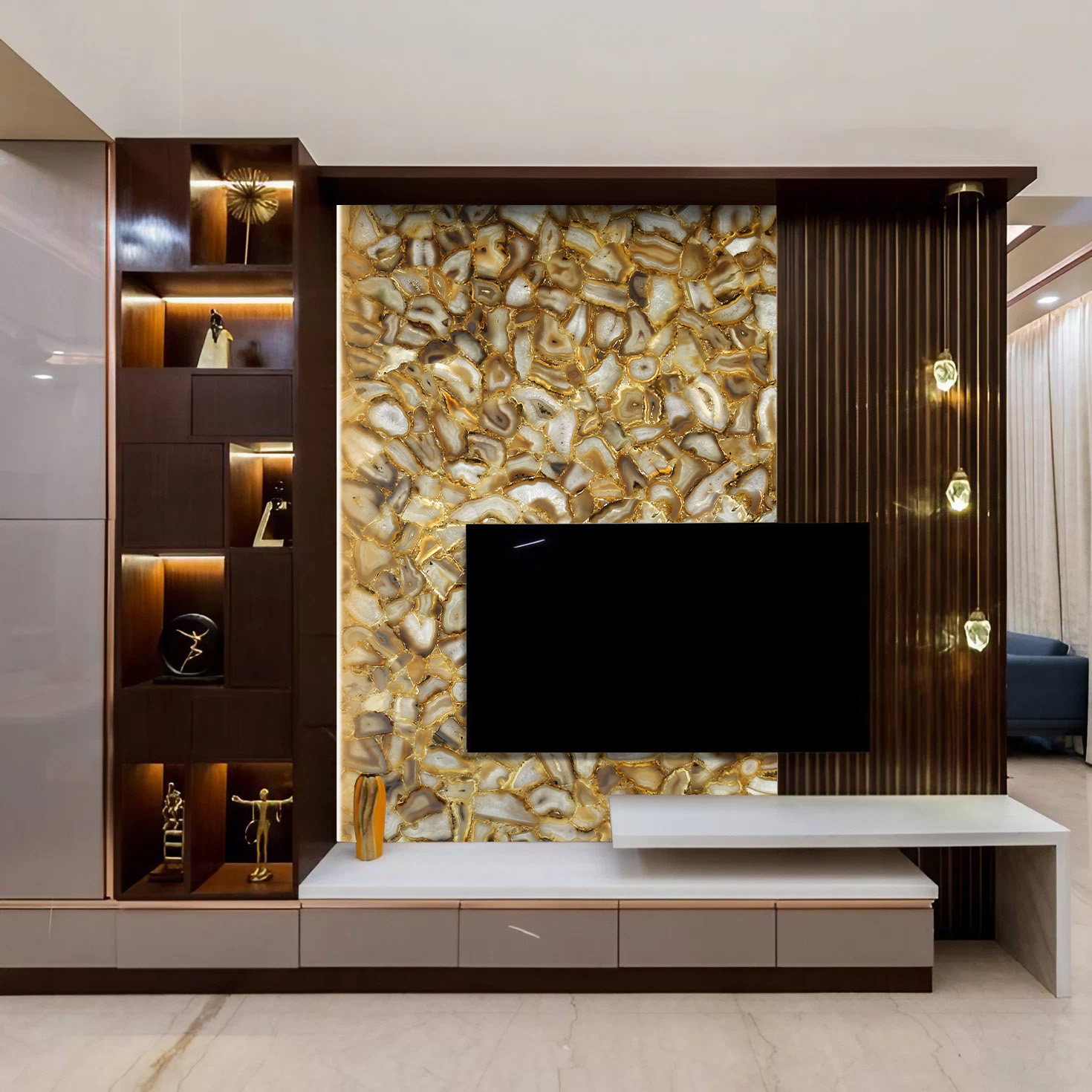
Unlike solid stone surfaces, agate contains translucent crystalline sections that allow light to pass through. This property makes it especially effective for illuminated installations. When properly assembled and polished, agate panels become functional surfaces as well as visual centerpieces.

How Agate Slabs Are Manufactured
The process begins with selecting agate geodes sourced from mining regions such as Brazil, India, and parts of Africa. Each geode contains crystalline agate formations that are sliced into thin pieces using diamond cutting equipment.
Assembly and Reinforcement
Because individual agate slices are irregular, artisans carefully arrange them to create a balanced composition. The slices are bonded together with specialized resins and reinforced to form a structurally stable slab panel.
Polishing and Finishing
The surface is then polished to highlight the stone’s crystalline structure and translucency. Depending on the application, slabs may also receive backing materials such as glass or acrylic to improve durability for vertical installations.
Types of Agate Slabs
Several varieties of agate are commonly used in architectural projects. The choice often depends on the desired color palette and the visual intensity of the patterns.
Brazilian, Indian and African Agate
Brazilian agate is known for vibrant banding and strong color saturation. Indian agate typically features warmer, earthy tones that suit organic interior themes. African agate varieties often display dramatic contrasts and expressive mineral formations.
Crystal, Fossil and Moss Agate
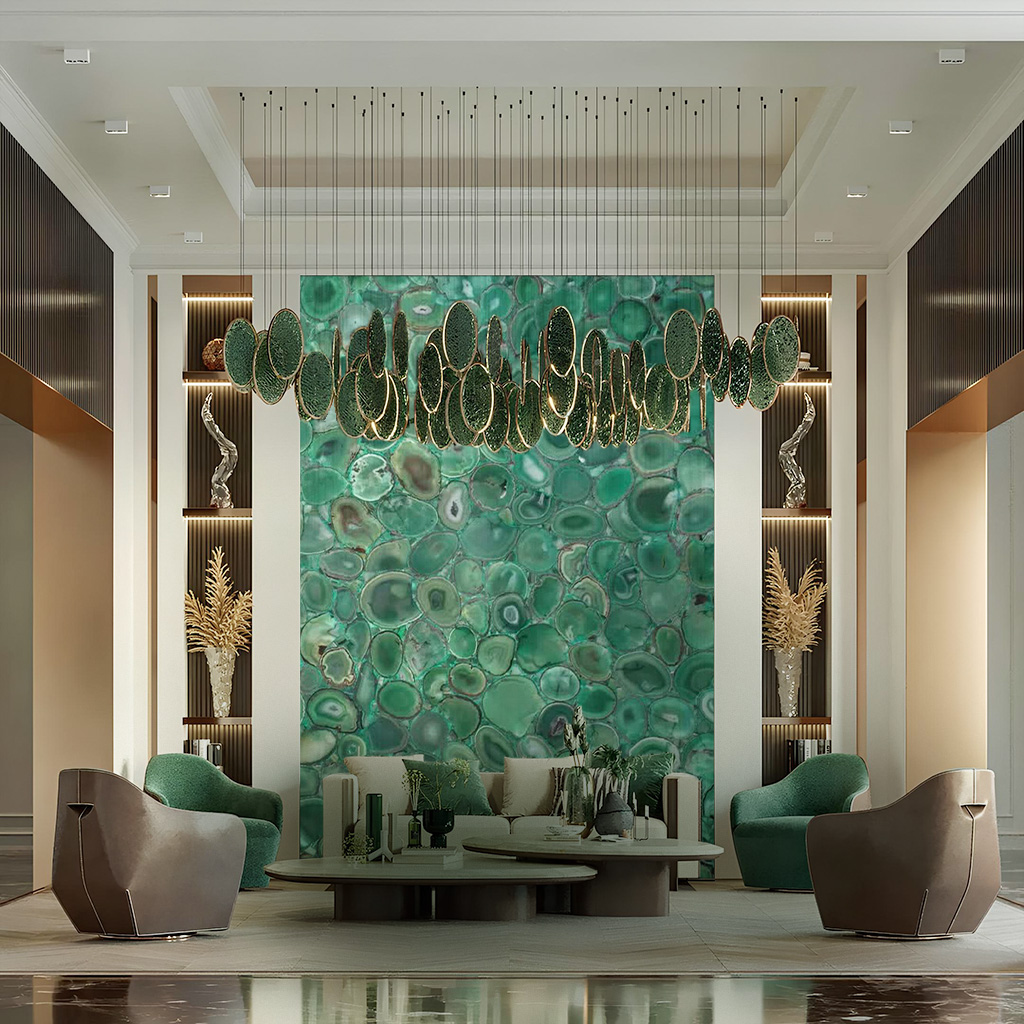
Crystal agate includes visible crystalline cavities that enhance light transmission. Fossil agate presents mineral structures that resemble ancient textures, while moss agate contains green inclusions that create organic, foliage-like patterns.


Common Architectural Applications
Agate slabs are most effective in areas where their natural translucency can be highlighted. Backlit wall panels are among the most popular installations because lighting enhances the stone’s layered structure.
Bar Counters and Reception Desks
Hospitality spaces frequently use agate surfaces for bar fronts and reception desks. When paired with concealed LED lighting, the material creates a refined ambient glow that elevates the surrounding space.
Vanities and Tabletops
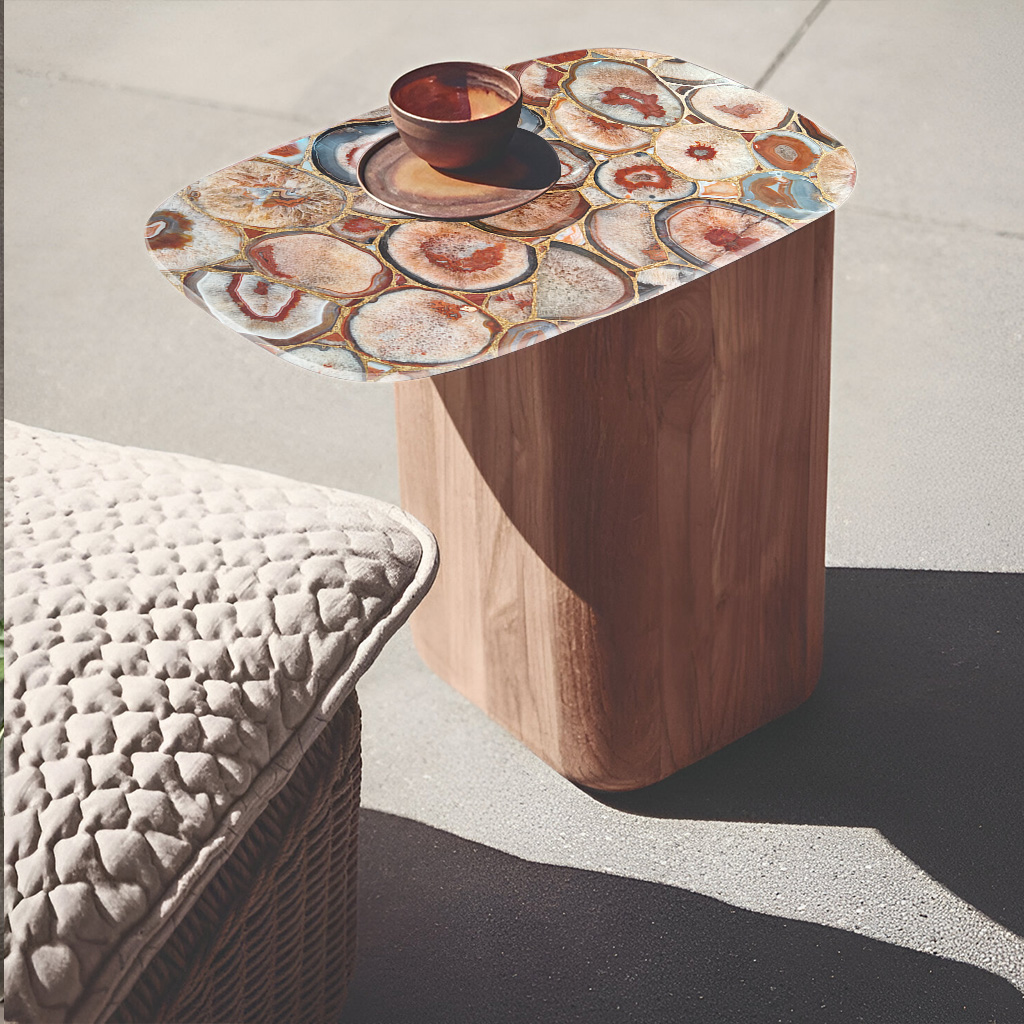
In residential settings, agate panels are often fabricated into bathroom vanities, coffee tables, or console surfaces. Because the stone is assembled from slices, these applications typically require reinforced backing to ensure long-term stability.
Blue Agate Slab Uses in Interior Design
Blue agate is one of the most requested varieties due to its layered tones that range from pale sky blue to deep ocean shades. The color palette works well in contemporary interiors that emphasize calm, light-filled spaces.
Backlit Feature Installations
Because blue agate often contains highly translucent sections, it is particularly suited to illuminated wall panels and bar fronts. Lighting reveals the internal banding structure and adds depth to the surface.
Decorative Panels and Furniture
Designers also incorporate blue agate into custom furniture pieces and art panels. These installations highlight the stone’s natural formations while maintaining a controlled architectural composition.

How to Choose the Right Slab for Your Project
The first consideration is the intended application. Decorative wall panels typically use slabs between 15–20 mm thick, while countertops or tabletops require stronger backing structures or laminated support.
Lighting and Translucency
If the project includes backlighting, select slabs with larger crystalline sections. These areas transmit light more effectively and create a clearer visual depth when illuminated.
Maintenance and Sealing
Agate surfaces should be sealed during fabrication to protect the stone from staining. Routine maintenance usually involves gentle cleaning with a pH-neutral cleaner and avoiding harsh chemicals.
FAQs – Agate Stone Slabs
Q1: Are agate slabs suitable for countertops?
A: They can be used for countertops when reinforced with structural backing, although they are more commonly installed as decorative surfaces.
Q2: How thick are typical agate slabs?
A: Most architectural agate slabs range between 15 mm and 20 mm depending on the backing and fabrication method.
Q3: Do agate surfaces require special maintenance?
A: Maintenance is straightforward—regular cleaning with a soft cloth and neutral cleaner is usually sufficient.
Q4: How does agate compare with onyx or quartzite?
A: Onyx offers strong translucency but less structural durability, while quartzite is extremely strong but not translucent. Agate sits between the two, offering decorative translucency with reasonable durability for architectural surfaces.