

Semiprecious Stone Slabs for Luxury Interiors
Interior architecture has evolved beyond traditional marble and granite surfaces. Designers now frequently incorporate semiprecious stone slabs into their projects to create interiors that feel distinctive and expressive. These natural gemstone surfaces combine mineral translucency, intricate crystalline structures, and striking color variations that make them ideal for statement installations.
In semiprecious stone slabs interior design, the material is rarely used randomly. Each stone type brings its own visual personality and works best in specific spaces depending on lighting conditions, scale, and overall design intent. Understanding where to use each stone allows architects and designers to achieve both aesthetic balance and architectural impact.
Why Designers Choose Semiprecious Stone Surfaces
Unlike traditional stone materials, semiprecious slabs contain crystalline formations that interact with light in unique ways. When cut and polished into slab panels, these gemstones reveal patterns that resemble natural artwork. Because each slab is formed through geological processes over millions of years, no two pieces are identical.
Natural Artistry in Architectural Spaces
These materials are often used as focal installations rather than background surfaces. A gemstone slab feature wall, illuminated bar counter, or decorative furniture surface can immediately define the visual character of an interior space.
The Role of Luxury Stone Surfaces in Design
Luxury stone surfaces are often specified in hospitality, high-end residential projects, and boutique retail spaces where distinctive materials are essential to the overall design concept.


Lobby Spaces – Labradorite or Blue Agate
Entrance areas set the tone for the entire interior. Labradorite and blue agate slabs are frequently chosen for lobby installations because of their dramatic mineral patterns and light-reflective qualities.
Creating a Statement Entrance
Labradorite displays iridescent flashes of blue and gold when light hits its surface, making it particularly effective for large wall panels. Blue agate, on the other hand, offers layered banding patterns that work beautifully in illuminated feature walls.
Gemstone Slab Feature Wall Installations
Designers often install these materials as a gemstone slab feature wall behind reception desks or as large backlit panels that anchor the visual identity of the space.
Bar Counters – Tiger Eye or Black Agate
Bar counters and hospitality spaces benefit from stones with strong visual movement. Tiger Eye and black agate are two materials commonly specified for these installations.
Warm Reflective Surfaces
Tiger Eye contains golden chatoyancy that produces a subtle reflective effect under lighting. This quality makes it particularly suitable for bar fronts and decorative panels in hospitality environments.
Black Agate for Contemporary Spaces
Black agate offers a more restrained aesthetic while still maintaining the layered banding structure typical of agate stones. Designers often pair it with brass or metallic accents.

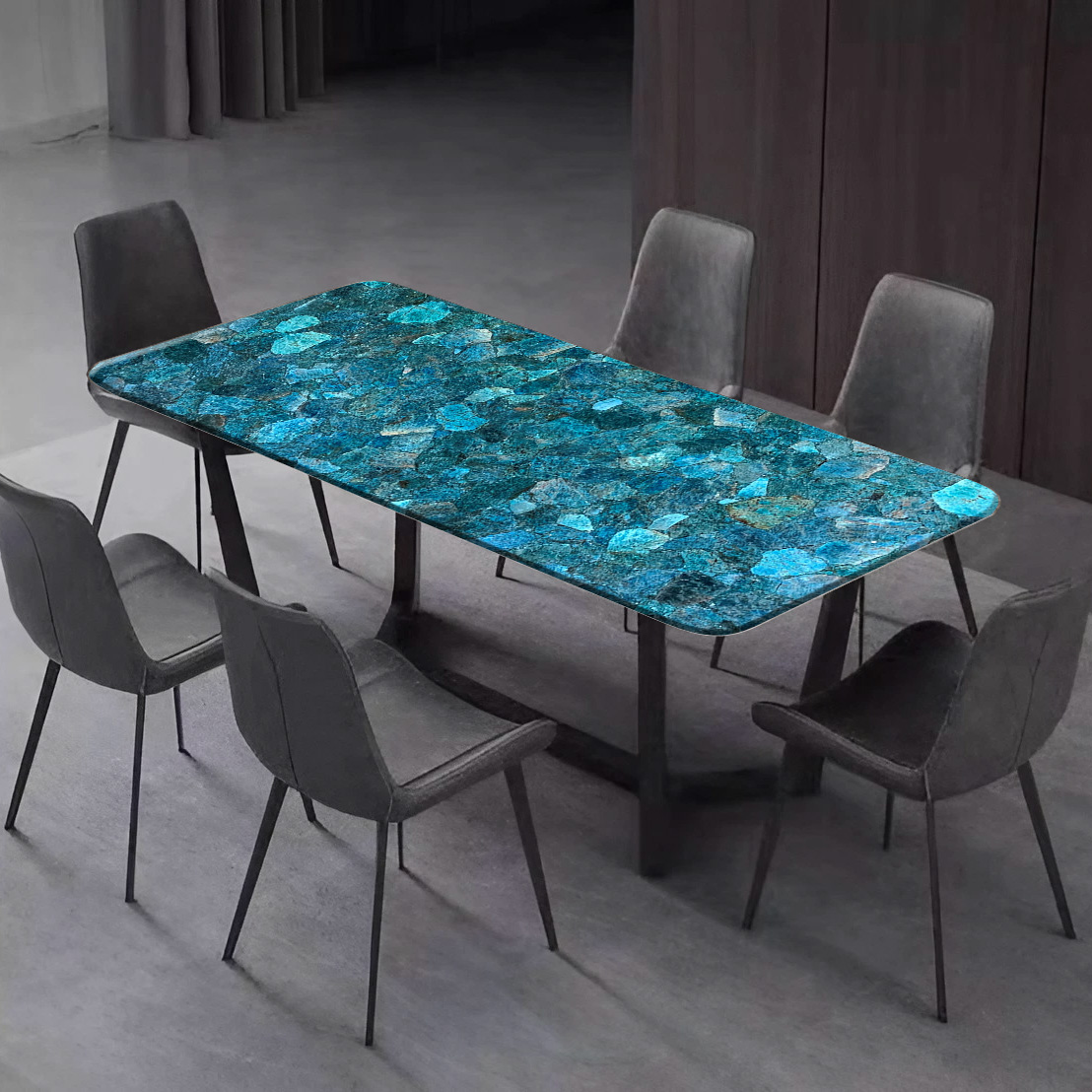
Bathrooms – Rose Quartz or Mother of Pearl
Bathrooms benefit from materials that introduce softness and subtle color. Rose quartz slabs are often used in vanity panels or illuminated wall installations due to their gentle pink tones.
Mother of Pearl for Reflective Surfaces
Mother of pearl panels reflect light softly across the room, making them suitable for decorative wall cladding in bathroom spaces.
Creating Spa-Like Interiors
When used thoughtfully, these materials help create calming environments that feel closer to a private spa than a traditional bathroom.
Kitchens – Quartzite or Malachite
Kitchens require materials that combine durability with strong visual presence. Quartzite slabs are often chosen for countertops because of their structural strength and resistance to wear.
Malachite as a Decorative Accent
Malachite, with its distinctive green banding, is typically used in smaller installations such as backsplash panels or decorative surfaces rather than heavy-use countertops.
Balancing Function and Aesthetics
Combining quartzite work surfaces with malachite accents allows designers to introduce gemstone character while maintaining functional durability.


Bedrooms – Amethyst Accent Walls
Bedrooms often benefit from stones that introduce color without overwhelming the space. Amethyst slabs provide rich purple tones that create a calm and intimate atmosphere.
Decorative Installations
Designers frequently install amethyst panels behind bed headboards or as illuminated wall features that add depth and visual interest to the room.
Subtle Luxury in Private Spaces
Because amethyst has a naturally crystalline structure, it adds texture and character without requiring large surface areas.
What to Consider When Specifying Semiprecious Stone Slabs
Choosing the right gemstone slab involves more than selecting a color. Architects must consider translucency, thickness, finish, and installation method.
Translucency and Lighting
Many gemstone slabs contain translucent sections that respond beautifully to backlighting. Designers should evaluate how light interacts with the stone before specifying it for illuminated installations.
Thickness and Structural Support
Most gemstone slab panels range between 15–20 mm thick and may require reinforced backing depending on the application. Wall panels and furniture installations often use laminated support structures.

FAQs – Semiprecious Stone Slabs Interior Design
Q1: Are semiprecious stone slabs suitable for countertops?
A: Some stones can be used for countertops, but many are better suited for decorative panels or feature installations.
Q2: What is the most popular gemstone slab for feature walls?
A: Blue agate and labradorite are commonly used for gemstone slab feature wall installations.
Q3: Do gemstone slabs require special lighting?
A: Backlighting is often used to enhance translucent sections of the stone and reveal internal patterns.
Q4: How thick are typical semiprecious stone slabs?
A: Most slabs used in interior installations range from 15 mm to 20 mm depending on the backing and fabrication method.


